How To Get A Medical Marijuana Card In CT - Empowering Your Medical Marijuana Journey
How To Get A Medical Marijuana Card In CT: Simple Steps
Getting a medical marijuana card in Connecticut can feel overwhelming when you're dealing with health problems and need relief. The good news is that Connecticut has made the process much simpler than most states. In recent times, the state registration fee for patients and caregivers will no longer be required. This means you can now get your card without paying state fees.
Connecticut allows medical marijuana for many health conditions, from cancer and chronic pain to anxiety and PTSD. The state has 42 qualifying conditions for adults and 11 for children under 18. You can complete most of the process online, and many people get approved within days of applying.
Key Takeaways
- No state fees: Connecticut removed all state registration fees in 2023
- Online process: Complete your application entirely online through the state portal
- Fast approval: Most applications are approved within 10 business days
- Many conditions qualify: 42 adult conditions, including anxiety, chronic pain, and PTSD
- Doctor consultation required: You must get certified by a Connecticut-licensed physician
- Proof of residency needed: Connecticut driver's license or state ID required
- Valid for one year: Cards expire after 12 months and need renewal
Connecticut Medical Marijuana Card Requirements
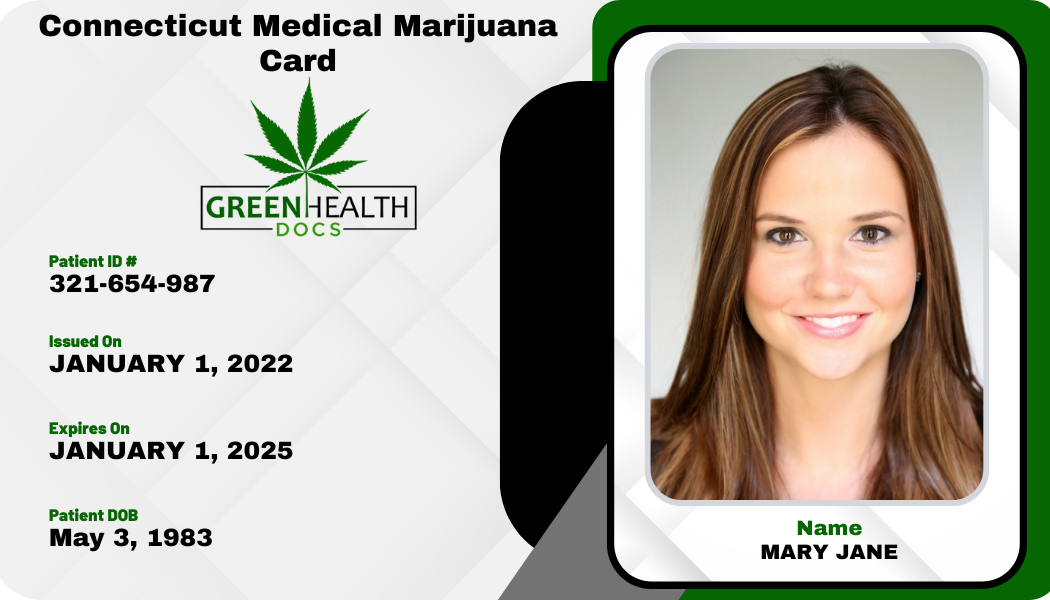
Connecticut Residency Proof Requirements
To apply for a medical marijuana card in Connecticut, you must meet two requirements: Be a resident of Connecticut. Be certified for medical marijuana by a Connecticut-licensed physician. The state requires solid proof that you live in Connecticut.
Accepted forms of residency proof include a valid Connecticut driver's license or state ID card. If you don't have these, you can use utility bills, bank statements, or lease agreements that show your Connecticut address. The address on your proof of residency must match the address on your application.
You cannot get a Connecticut medical marijuana card if you live in another state, even if you work in Connecticut or visit regularly. The residency requirement is strict and checked carefully during application review.
Age Requirements And Minor Patient Process
Adults 18 and older can apply for medical marijuana cards on their own. The process is straightforward and only requires meeting with one doctor who can certify your condition.
Minor patients must meet with a board-certified specialist in the treatment field for their medical condition. One of these doctors will submit the certification. Children under 18 need approval from both their regular doctor and a specialist who treats their specific condition.
Parents or legal guardians must complete the application process for minor patients. They also need to register as caregivers, which requires a separate application and background check.
Qualifying Medical Conditions
Connecticut accepts medical marijuana for many health conditions. You must be a resident of Connecticut with a qualifying condition like cancer, chronic pain, or PTSD to qualify for a medical marijuana card. The state has expanded the list several times, making it easier for patients to qualify.
Anxiety disorders, added to the list of qualifying conditions in recent years, have rapidly surged to become the number one reason patients seek medical cannabis in the state. This shows how Connecticut has recognized the medical benefits of cannabis for mental health conditions.
The state reviews petitions to add new qualifying conditions. The Connecticut Medical Marijuana Programaccepts petitions for the addition of new qualifying conditions by email or regular mail. Members of the public can submit such petitions with evidence to support the inclusion of suggested additions.
Complete List Of Qualifying Conditions In Connecticut
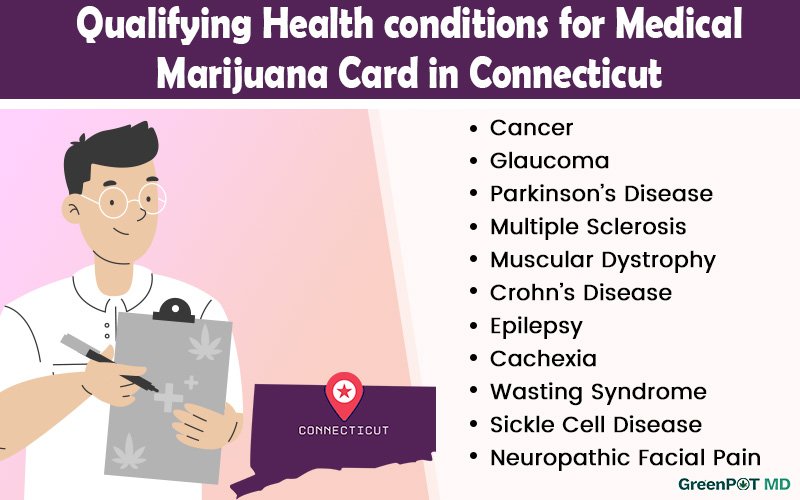
Adult Qualifying Conditions (42 Conditions)
Connecticut recognizes 42 medical conditions for adult patients. The most common conditions include:
- Amyotrophic Lateral Sclerosis (ALS)
- Autism Spectrum Disorder
- Cachexia
- Cancer
- Cerebral Palsy
- Chronic Neuropathic Pain Associated with Degenerative Spinal Disorders
- Chronic Pain of at least 6 months duration associated with a specified underlying chronic condition that is unresponsive to other treatment interventions
- Chronic Pancreatitis
- Complex Regional Pain Syndrome, Type 1 and Type II
- Crohn's Disease
- Cystic Fibrosis
- Damage to the Nervous Tissue of the Spinal Cord with Objective Neurological Indication of Intractable Spasticity
- Ehlers-Danlos Syndrome Associated with Chronic Pain
- Epilepsy
- Female Orgasmic Difficulty/Disorder
- Glaucoma
- Hydrocephalus with Intractable Headache
- Hiv/Aids
- Intractable Headache Syndromes
- Interstitial Cystitis
- Intractable Neuropathic Pain that Is Unresponsive to Standard Medical Treatments
- Irreversible Spinal Cord Injury with Objective Neurological Indication of Intractable Spasticity
- MALS Syndrome (Median Arcuate Ligament Syndrome)
- Movement disorders associated with Huntington's Disease
- Multiple Sclerosis
- Muscular Dystrophy
- Neuropathic Facial Pain
- Osteogenesis Imperfecta
- Parkinson's Disease
- Post-Herpetic Neuralgia
- Post-Laminectomy Syndrome with Chronic Radiculopathy
- Post-Traumatic Stress Disorder (PTSD)
- Severe Psoriasis and Psoriatic Arthritis
- Severe Rheumatoid Arthritis
- Sickle Cell Disease
- Spasticity or Neuropathic Pain Associated with Fibromyalgia
- Terminal Illness Requiring End-of-Life Care
- Tourette Syndrome
- Ulcerative Colitis
- Uncontrolled Intractable Seizure Disorder
- Vulvodynia and Vulvar Burning
- Wasting Syndrome
Other qualifying conditions include fibromyalgia, rheumatoid arthritis, severe nausea, cachexia (wasting syndrome), and damage to the nervous tissue of the spinal cord. The full list covers most serious medical conditions that cause chronic symptoms.
Mental health conditions like severe depression, bipolar disorder, and obsessive-compulsive disorder also qualify. Connecticut recognizes that medical marijuana can help with both physical and mental health symptoms.
Pediatric Qualifying Conditions (11 Conditions)
Children under 18 can qualify for medical marijuana cards, but only for specific severe conditions. The pediatric qualifying conditions include:
- Severe epilepsy and seizure disorders
- Severe autism spectrum disorders with self-injurious behaviors
- Terminal cancer with less than one year to live
- Severe cerebral palsy with muscle spasticity
- Severe cystic fibrosis with chronic pain
- Severe HIV/AIDS with wasting syndrome
- Severe multiple sclerosis (rare in children)
- Severe Tourette syndrome with severe tics
- Severe spinal cord injuries with spasticity
- Severe brain injuries with chronic symptoms
- Any terminal illness with less than one year to live
The pediatric program focuses on the most severe conditions where traditional treatments have failed. Children must try other medications first before qualifying for medical marijuana.
Documentation Requirements For Each Condition
Your doctor needs specific medical records to certify your condition. For chronic pain, you need records showing the pain has lasted more than 3 months and hasn't responded well to other treatments.
Mental health conditions require records from psychiatrists, psychologists, or other mental health professionals. Your doctor will review these records to confirm your diagnosis meets the qualifying criteria.
Cancer patients need pathology reports, treatment records, or oncology notes. For conditions like epilepsy, you need EEG results, seizure logs, or neurology records that document your seizures.
Step-by-Step Application Process
Finding A Certified Connecticut Medical Marijuana Doctor
To get started in your application for a medical marijuana card in Connecticut, start by making an appointment with a certified medical marijuana prescriber. The purpose of this is to determine your qualifying condition and whether you meet the criteria for Connecticut Medical Marijuana certification.
Not all doctors in Connecticut can certify patients for medical marijuana. Are board-certified in one of the following specialties: neurology, pain medicine, pain management, medical oncology, psychiatry, infectious disease, family medicine, or gynecology. Only doctors with special training and state approval can provide certifications.
You can find certified doctors through online services or by calling doctors' offices directly. Many certified doctors now offer telemedicine appointments, making it easier to get certified from home.
Medical Evaluation And Certification Process
Your appointment will last 15-30 minutes and focus on your medical history and current symptoms. The doctor will review your medical records and ask questions about how your condition affects your daily life.
This consultation fee is $149 for an examination. Different doctors charge different amounts, with fees ranging from $100 to $300. Online services often cost less than in-person visits.
The doctor will explain how medical marijuana might help your condition and discuss dosing, delivery methods, and potential side effects. If you qualify, they'll submit your certification directly to the state through the online system.
Online Application Submission
Complete the application by creating a DAS Business Network account and accessing the online certification system. Once your doctor submits your certification, you'll get an email with instructions to complete your application.
The online application asks for basic information like your name, address, phone number, and email. You'll need to upload a photo and proof of Connecticut residency. The system guides you through each step.
Double-check all information before submitting. Mistakes can delay your application or cause rejection. Make sure your name matches exactly on all documents.
Required Documents And Proof Of Residency
You need three main documents for your application:
Connecticut residency proof: Driver's license, state ID, or utility bills with your Connecticut address. The address must match what you put on your application.
Photo identification: Clear photo of your face that meets state requirements. The photo should show your full face with good lighting and no sunglasses or hats.
Doctor's certification: Your certified doctor submits this directly to the state. You don't need to provide this yourself, but make sure your doctor has submitted it before you apply.
Keep digital copies of all documents on your phone or computer. This makes it easier to upload them to the application system.
Costs And Fees Breakdown
State Registration Fees
Starting July 1, 2023, the state registration fee for patients and caregivers will no longer be required. This is huge news for Connecticut patients. Before 2023, patients paid $100 to the state for registration.
Connecticut is one of the few states that doesn't charge patients any state fees. This makes getting a medical marijuana card much more affordable than in other states.
The removal of state fees was part of Connecticut's effort to make medical marijuana more accessible to patients who need it. Many patients couldn't afford the extra $100 fee on top of doctor visits.
Doctor Consultation Costs
Doctor consultation fees vary widely in Connecticut. This consultation fee is $149 for an examination. However, prices range from $100 to $300 depending on the doctor and the type of visit.
Online telemedicine appointments usually cost less than in-person visits. Many online services charge $100-200 and can complete your certification the same day. In-person visits with specialists often cost $200-300.
Some doctors offer package deals that include the initial consultation and first renewal at a discount. Ask about pricing when you call to schedule your appointment.
Hidden Costs And Additional Expenses
While the state doesn't charge fees, you'll have other costs for your medical marijuana card:
Medical records: Some doctors charge $25-50 to transfer your medical records to the certifying physician. Call your regular doctor's office to ask about record transfer fees.
Travel costs: If you choose an in-person appointment, factor in gas money or public transportation costs to get to the doctor's office.
Renewal costs: Your card expires after one year. You'll need another doctor consultation (usually $100-200) and a new application to renew.
Medical marijuana purchases: The medicine itself costs money. Connecticut dispensaries charge $40-60 per eighth of flower, with other products costing more.
Budget at least $150-250 total to get your initial medical marijuana card, including the doctor visit, but not counting the actual medicine purchases.
Processing Timeline And What To Expect

Application Review Timeline
Once your application is submitted, the review and approval process typically takes up to 10 business days. Most patients get approved faster, often within 3-5 business days if all documents are correct.
The state reviews applications in the order they receive them. Complete applications with all required documents process faster than incomplete ones. During busy periods, processing might take the full 10 business days.
You'll get email updates about your application status. Check your email regularly, including spam folders, for messages from the Connecticut Department of Consumer Protection.
Card Delivery Process
Connecticut doesn't mail physical cards anymore. Instead, you get a digital certificate that you can print or save on your phone. This digital format makes it faster to get your card and easier to renew.
Your digital certificate includes your photo, registration number, expiration date, and other required information. Save multiple copies on different devices in case you lose access to one.
Print a copy of your certificate to keep in your wallet. Some dispensaries prefer to see printed copies, although they're required to accept digital versions on your phone.
What To Do If Your Application Is Delayed
If your application takes longer than 10 business days, contact the Connecticut Department of Consumer Protection. Common reasons for delays include incomplete applications, unclear photos, or problems with residency proof. The state will email you if they need additional documents or information.
It's recommended to renew early to avoid any gaps in your certification. Start your renewal process 30-60 days before your card expires to ensure continuous access to medical marijuana.
Online Vs In-Person Certification Options
Benefits Of Online Medical Marijuana Evaluations
Online medical marijuana evaluations have become very popular in Connecticut. They're convenient, often cheaper, and just as legitimate as in-person visits. You can complete your consultation from home using your phone or computer.
Online appointments are usually shorter than in-person visits. Most take 15-20 minutes and focus specifically on your qualifying condition and medical marijuana certification. You don't need to drive anywhere or take time off work.
Many online services offer same-day appointments and can submit your certification to the state immediately after your consultation. This speeds up the entire process significantly.
Traditional In-Person Doctor Visits
In-person visits give you more time to discuss your condition with the doctor. Some patients prefer face-to-face consultations, especially if they have complex medical histories or multiple conditions.
In-person doctors can perform physical examinations if needed for your condition. This might be important for conditions like chronic pain or muscle spasticity, where physical symptoms are relevant.
Some insurance plans might cover part of an in-person consultation with your regular doctor, although most don't cover medical marijuana certifications specifically.
Choosing The Right Option For Your Situation
Choose online consultations if you want convenience, lower costs, and faster processing. Online works well for most qualifying conditions, especially mental health conditions like anxiety or PTSD.
Choose in-person visits if you have complex medical needs, want longer consultation time, or feel more comfortable talking to a doctor face-to-face. In-person might be better for conditions requiring physical examination.
Both options result in the same medical marijuana certification. The state treats online and in-person certifications exactly the same way.
Caregiver Registration Process
Who Can Become A Caregiver
Caregivers help patients who cannot manage their medical marijuana themselves. This includes minor patients, elderly patients, or adults with disabilities who are prevented from visiting dispensaries alone.
Starting July 1, 2023, the state registration fee for patients and caregivers will no longer be required. Like patients, caregivers no longer pay state registration fees, making it more affordable to help family members.
Caregivers must be at least 18 years old and Connecticut residents. They cannot have certain criminal convictions related to drug offenses. The state runs background checks on all caregiver applicants.
Caregiver Application Requirements
Caregiver applications require similar documents to patient applications. You need proof of Connecticut residency, a clear photo, and background check consent forms.
The patient must designate you as their caregiver during their application process. Patients can have up to two caregivers, but each caregiver can only help one patient at a time.
Caregivers complete their applications through the same online system as patients. The process takes about the same amount of time - usually 5-10 business days for approval.
Caregiver Responsibilities And Legal Limits
Caregivers can purchase medical marijuana on behalf of their patients and help patients use their medicine safely. They must follow all the same laws that apply to patients.
Caregivers cannot use their patients' medical marijuana themselves. The medicine belongs only to the registered patient, and using it is illegal for anyone else.
Caregivers must keep medical marijuana in original dispensary containers and transport it safely between dispensaries and patients. They should carry copies of both their caregiver certificate and the patient's certificate when transporting medicine.
Using Your Connecticut Medical Marijuana Card
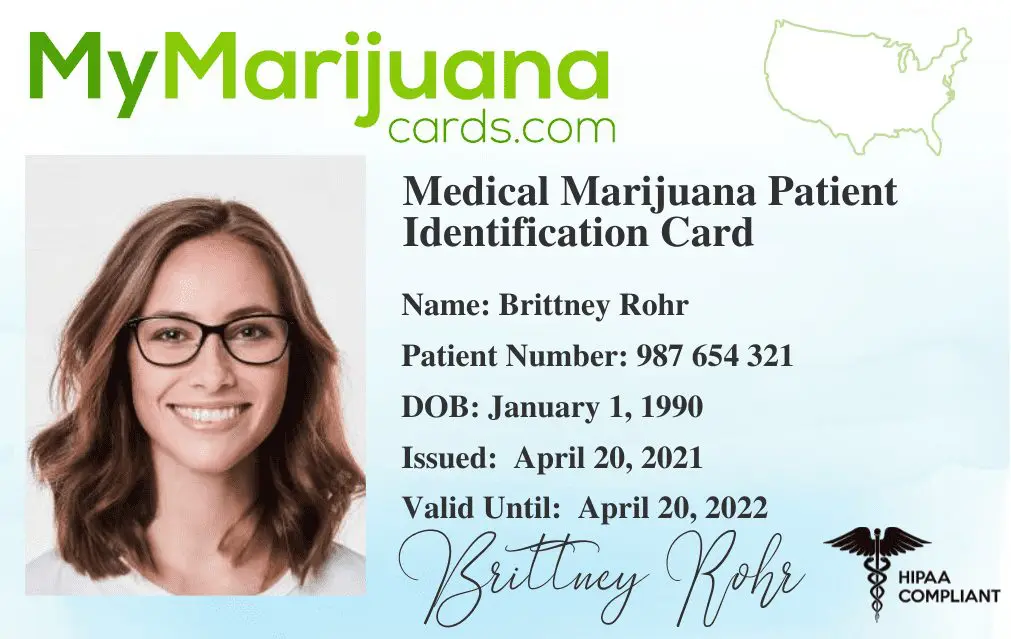
Finding Licensed Dispensaries
Connecticut has dispensaries throughout the state, making it convenient for most patients to access medicine. All dispensaries must follow strict state regulations for safety and quality.
You can find dispensary locations, hours, and contact information on the Connecticut Department of Consumer Protection website. Many dispensaries also have their websites with menus and online ordering systems.
Call dispensaries before visiting to ask about current products, prices, and wait times. Popular dispensaries can get busy, especially on weekends and evenings.
Purchase Limits And Monthly Allotments
Adults 21 or over can possess up to 1.5 ounces of cannabis flower or 7.5 g of cannabis concentrate on their person and no more than 142 g or 5 ounces in their homes. Connecticut patients can purchase up to 5 ounces of flower or equivalent amounts of other products per month.
Your monthly allotment resets on the same day each month based on when you first registered. Dispensaries track your purchases electronically to ensure you don't exceed monthly limits.
Different product types count differently toward your monthly limit. Concentrates and edibles have different conversion rates than flower. Dispensary staff can help you understand how different products affect your monthly allotment.
Legal Protections And Usage Restrictions
Your medical marijuana card provides legal protection for possessing and using medical marijuana in Connecticut. Police cannot arrest you for possession if you have a valid card and stay within legal limits.
In the presence of a person under the age of 18 years of age. In any other way that endangers the health or well-being of a person other than the qualifying patient or primary caregiver. You cannot use medical marijuana around children or in ways that could harm others.
You cannot drive while under the influence of marijuana, even with a medical card. Employers can still test for marijuana use and take action based on their policies. Landlords might restrict marijuana use in rental properties.
Renewal Process And Card Maintenance
When And How To Renew Your Card
Medical marijuana cards in Connecticut expire exactly one year after approval. It's recommended to renew early to avoid any gaps in your certification. Start the renewal process 30-60 days before your expiration date.
The renewal process is similar to getting your initial card. You need a new doctor consultation to confirm you still have a qualifying condition and still need medical marijuana treatment.
Log in to your Connecticut medical marijuana portal account and apply for a renewal after getting your new medical certification. The online system will show your renewal options when you log in.
Renewal Costs And Requirements
Renewal costs include only the doctor consultation fee since Connecticut doesn't charge state fees. Expect to pay $100-200 for your renewal consultation, similar to initial certification costs.
You don't need new residency proof if your address hasn't changed. However, update your address in the system if you've moved within Connecticut. Moving out of state means you can't renew your Connecticut card.
Some doctors offer discounted renewal consultations for existing patients. Ask your certifying doctor about renewal pricing when you get your initial certification.
Updating Your Medical Information
Contact the state if your contact information changes during the year. For more information, please call (860) 713-6066 or send an e-mail to dcp.mmp@ct.gov. Updated information ensures you receive important notices about your card.
If your medical condition changes significantly, discuss this with your certifying doctor during renewal. New qualifying conditions might change your treatment recommendations or monthly purchase limits.
Keep your medical records updated with your primary care doctor. This helps your certifying doctor make better recommendations about your medical marijuana treatment during renewal consultations.
See Also: How To Choose The Right Cannabis Strain
FAQs About Getting A Medical Marijuana Card In CT
How Long Does It Take To Get A Medical Marijuana Card In Connecticut?
Once your application is submitted, the review and approval process typically takes up to 10 business days. Most patients get approved within 3-5 business days if their application is complete and accurate. The fastest approvals happen within 24-48 hours. The total timeline depends on how quickly you can schedule your doctor appointment.
What Medical Conditions Qualify For Medical Marijuana In Connecticut?
Connecticut recognizes 42 qualifying conditions for adults and 11 for children under 18. The most common adult conditions include chronic pain, anxiety disorders, PTSD, cancer, epilepsy, and multiple sclerosis. Anxiety disorders, added to the list of qualifying conditions in recent years, have rapidly surged to become the number one reason patients seek medical cannabis in the state.
How Much Does A Medical Marijuana Card Cost In Connecticut?
Starting July 1, 2023, the state registration fee for patients and caregivers will no longer be required. You only pay for the doctor consultation, which ranges from $100-300 depending on whether you choose online or in-person visits. This consultation fee is $149 for an examination.
Can I Use My Connecticut Medical Marijuana Card In Other States?
Connecticut doesn't have reciprocity agreements with other states, so your Connecticut card doesn't work outside the state. However, some states accept out-of-state medical marijuana cards for their medical marijuana programs. Check the laws in any state you plan to visit. Never transport Connecticut medical marijuana across state lines, as this violates federal law even if both states have medical marijuana programs.
What Happens If I Get Pulled Over With Medical Marijuana?
Your medical marijuana card provides legal protection in Connecticut as long as you follow state laws. Keep your digital certificate on your phone and carry printed copies. Store medical marijuana in original dispensary containers with labels. Adults 21 or over can possess up to 1.5 ounces of cannabis flower or 7.5 g of cannabis concentrate on their person.
Can Minors Get Medical Marijuana Cards In Connecticut?
Yes, but the process is more complex. Minor patients must meet with a board-certified specialist in the treatment field for their medical condition. Children need approval from both their regular doctor and a specialist who treats their specific condition. Only 11 severe conditions qualify for pediatric medical marijuana, including severe epilepsy, autism with self-injurious behaviors, and terminal cancer.
Do I Need To Renew My Medical Marijuana Card?
Yes, Connecticut medical marijuana cards expire after exactly one year. It's recommended to renew early to avoid any gaps in your certification. Start your renewal 30-60 days before expiration to ensure continuous access to medical marijuana. Renewal requires a new doctor consultation but costs less than initial certification since you don't need new residency proof.
Conclusion
Getting your Connecticut medical marijuana card is now easier and more affordable than ever. Starting July 1, 2023, the state registration fee for patients and caregivers will no longer be required. You can complete the entire process online and get approved within days.
Start by scheduling a consultation with a certified Connecticut medical marijuana doctor. Online consultations offer convenience and often cost less than in-person visits. Make sure you have proof of Connecticut residency and medical records that document your qualifying condition.
Once your application is submitted, the review and approval process typically takes up to 10 business days. Most patients get their digital certificates much faster. Once approved, you can immediately start purchasing medical marijuana from licensed Connecticut dispensaries to begin treating your condition safely and legally.
You Might Like: How To Store Cannabis Properly